

An Origin Theory: Using Sparse Findings and Indirect Evidence to Propose a Multi-family Migration, 1730-1850, Barbados>>North Carolina>>Mississippi
September 28 @ 6:30 pm – 8:00 pm CDT
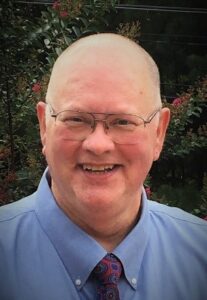
Phillip Adderley
Ark-La-Tex Genealogical Association
Professional researchers and family historians sometimes encounter research questions that cannot be fully answered or proved within a desired timeframe. In those situations, accumulated findings, timelines, and recommendations may be preserved for research to continue into future generations. Additionally, an overarching detailed theory can place unproven links within the context of established evidence and help others evaluate the most promising paths forward. Even where records are lost or surviving fragments are difficult to access, genealogical standards still guide the careful collection and evaluation of information as suitable and relevant evidence for plausible origin theories. Kinship, considered alongside historical and genealogical research, is often essential in 17th- to 19th-century migration research, as illustrated by the Robert James family of 1833 Jasper County, Mississippi, and his paternal line’s origins.
Philip Burnett Adderley is a retired professional genealogist, author, and lecturer. He holds a B.S. and B.A. in physics and mathematics as a Robert E. Lee Scholar at Washington and Lee University and an M.S.E.E. from Rensselaer Polytechnic Institute. Born in Bermuda a British subject, he lived in Colombia, South America as an exchange student, and in Spain for five and a half years as a Senior Project Manager for Lockheed Martin.
An avid genealogist since 1977, Philip completed several specialized tracks at Samford University’s Institute of Genealogy and Historical Research, including its Advanced Methodology and Evidence Analysis Course, and the National Institute on Genealogical Research at the National Archives. Mr. Adderley has conducted genealogical research professionally since 2006 for private clients nationwide, with an emphasis on compiled narrative lineages and brick-wall problems, the latter augmented since 2010 by DNA testing.
In 2009, he was licensed to use the Certified Genealogist® credential for a five-year term by the Board for Certification of Genealogists. His work has been published in the National Genealogical Society Quarterly and The NGS Magazine. He served the National Genealogical Society through 2011 as a grader for local land records and migration modules in American Genealogy: A Home Study Course, and later as a mentor/grader for the American Genealogical Studies course series.
After he retired from full-time work in 2015, he continued working on a limited basis for clients on long-term research projects. Philip specializes in land, courthouse, and archival records of the southern American colonies and states, as well as 17th- to 19th-century British colonial records of Bermuda. He is a member of the National Genealogical Society and a past president of the Ark-La-Tex Genealogical Association, Inc., of Shreveport, Louisiana. His lectures and seminars, which emphasize case studies and research methodology, have been well received at genealogical conferences and associations in Alabama, Mississippi, Louisiana, and Texas.
A Zoom link will be sent to members and mailing list subscribers the morning of the meeting.
The presenters retain the copyright to their presentations, including all images and other intellectual property. Copying, recording, taking screenshots, transcribing, AI note-taking, or redistributing any portion of these presentations in any form is strictly prohibited under penalty of law. The official recording of presentations will be available for a limited time in the members-only section of the Heritage Seekers website. Thank you for understanding and cooperating.